DBMS – CBSE Class 10 IT (402)
 0
0
 0
0
DBMS
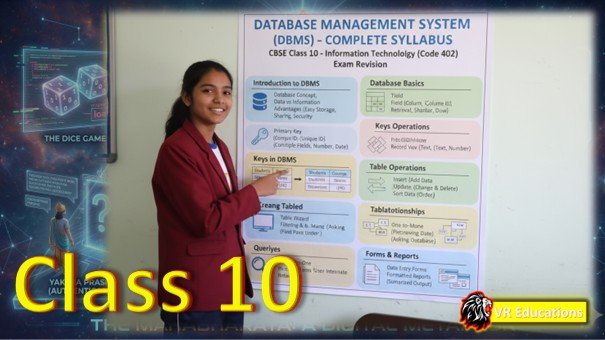
Here’s the complete Class 10 IT (402) — Database Management System (DBMS) syllabus as per the CBSE curriculum for session 2025-26 (Unit 3 of the subject):
📚 Unit 3 – Database Management System (DBMS) – CBSE Class 10 IT (402)
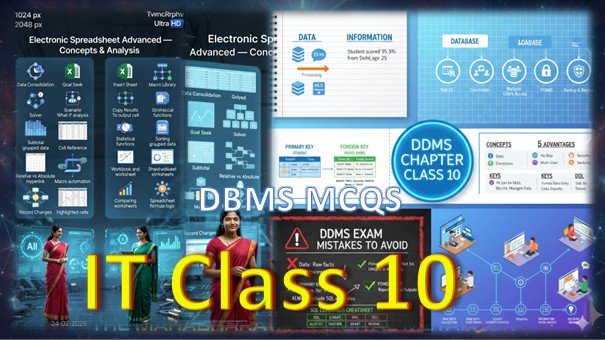
🧠 1. Introduction to DBMS
-
Concept of Data vs. Information
-
What is a Database (organized collection of related data)
-
Advantages of using a Database
-
Features of Database
-
Relational vs non-relational data concepts
-
Examples of DBMS software (e.g., LibreOffice Base, MS Access, MySQL)* (focus only on understanding DBMS; detailed SQL/MySQL application isn’t core unless specified in your school guidance)
🗂 2. Basic Database Concepts & Terminology
-
Table, Field (Attribute), Record (Tuple)
-
Database Objects (Tables, Queries, Forms, Reports)
-
Data values and data types
-
Types of databases (flat file vs relational)
-
Keys in DBMS:
• Primary Key (unique identifier)
• Composite Primary Key
• Foreign Key (link between tables)
🛠 3. Creating and Managing Tables
-
Starting a DBMS application (e.g., LibreOffice Base)
-
Create and edit tables using:
• Table Wizard
• Design View (choosing fields and data types) -
Setting field properties (default, required, format)
-
Assigning a Primary Key for tables
🔄 4. Operations on Tables
-
Inserting data into tables
-
Editing / updating records
-
Deleting records
-
Sorting data within tables
-
Understanding and maintaining referential integrity (relationship constraints)
-
Creating and editing relationships:
• One-to-One
• One-to-Many
• Many-to-Many
🔍 5. Queries
-
Concept of a Query (retrieve / filter data)
-
Create and run basic queries to fetch required information from tables
🔢 6. Forms and Reports
-
Using Forms to enter and view data easily
-
Creating Reports to display information in formatted outputs
(These may be part of exercises or practical tasks.)
🧪 Practical/Coding Skills (Linked to DBMS)
(Important for practical board & portfolio work — marks 10 for practical + relationships with theory)
✔ Create Database and Tables in a DBMS tool (LibreOffice Base / similar)
✔ Insert/Edit/Delete Records
✔ Sort data and set field properties
✔ Create Keys and Relationships between tables
✔ Design and run Queries
✔ Create Forms for data entry
✔ Generate Reports from data
📌 What Is Not Core Unless Your School Specifies
-
Advanced SQL scripting/commands (e.g., complex SELECT, joins, triggers) are generally not required for the Class 10 syllabus unless explicitly included by your school teacher or course guide. CBSE curriculum emphasizes DBMS concepts, table creation, relationships, and basic queries.


Share this content: